Filming Trip 2012: “In the Can”

 From Aly:

As many of you know, the main purpose of our journey with Dwankhozi Hope to Zambia was to capture footage of the Dwankhozi Community and the school in order to highlight the organization and show the immense need that they are working so hard to address.

Video can take us to places that are so removed from our realities. We hope to visually bring the audience and our supporters to Dwankhozi Community school in order to meet the amazing personalities that we have met; to see the many resources that they lack (which we take for granted every day); to see their hard work in action of striving for a better education and way of life; to feel the hope and inspiration that is infectious here. These are the videos that we have set out to make and we can’t wait to share the finished products with you all!

Kindle Project: A huge obstacle facing these students is the lack of literature.  The Zambian government is only able to provide a VERY limited amount of text books that are shared among the entire school.  Moreover, the transportation of books for all of the reading levels from the US would be almost impossible. Thus, we decided to bring 6 Kindles, each loaded with 50 books- ranging in reading levels, to test the viability of using E-readers to build a library which otherwise could not exist. Kate’s amazing idea to use the Kindles was even more successful than we could have imagined and the video for this project will show just that!

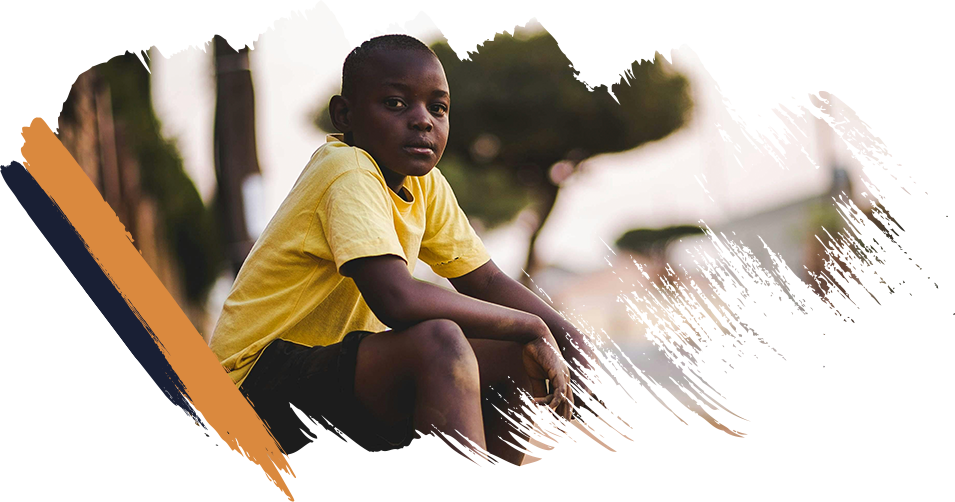
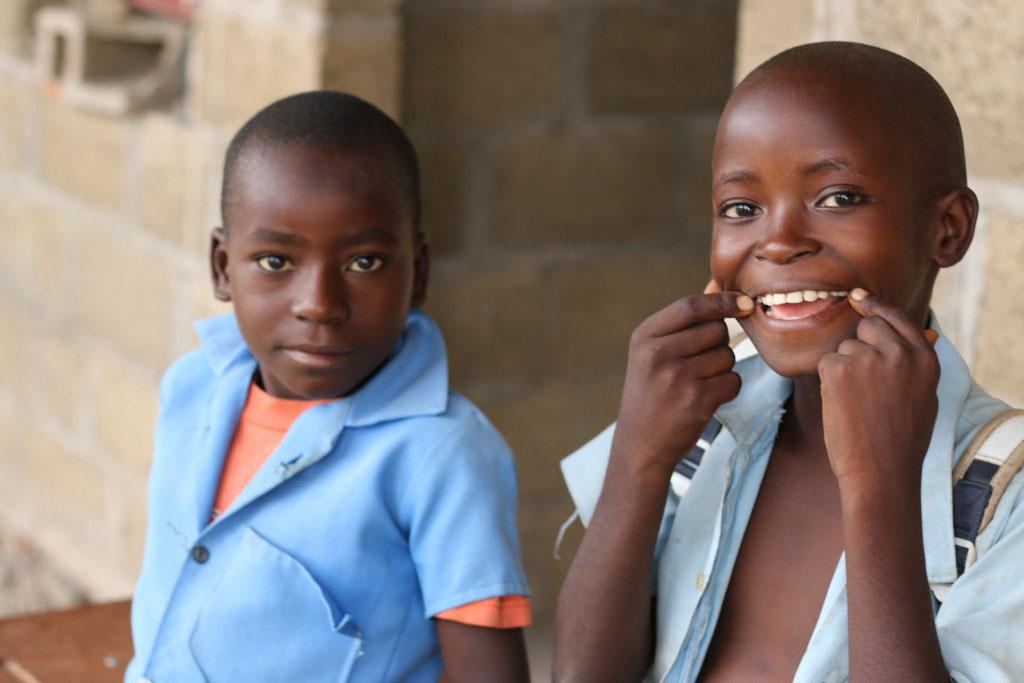
Day-in-the-Life of a Student at Dwankhozi: The life of a young child in the villages of rural Zambia is worlds apart from those of our children in the US. We decided to do a video piece, which encapsulates the hard work that these children put in each day to achieve an education. We followed an 11-year-old student named Martin from Phunga village. His smile will be in my mind forever, I can’t wait for everyone to see this sweet boy’s story.

Scholarship Candidates Video: There are SO many students who have put in the hard work to continue their education but whose families can simply not afford the minimal fees for secondary school. With this piece you will get to meet these dedicated students who are available to be sponsored, learn about their lives, and hear about the dreams they have for their futures.


Masala Family Video: This documentary style piece will tell the inspiring story of the Masala Family (and 10 siblings) and how they have risen from the most difficult of circumstances and how education has changed their lives.

Hope this fills everyone in on what the heck we are doing over here (other than playing with lions). We appreciate the support and love so much! We can’t wait to share these special stories with you all :)

Filming Trip 2012: The Village

From Aly:

Being a native of the Emerald City I thought I had seen the greenest greens… until I got to Zambia. Never have I ever seen a more lush, vibrant green landscape. Every time I look out the window on our drives to the school or the family village, I am in awe of the scenery. It looks like something out of a national geographic magazine – another world that must have been dreamed up.

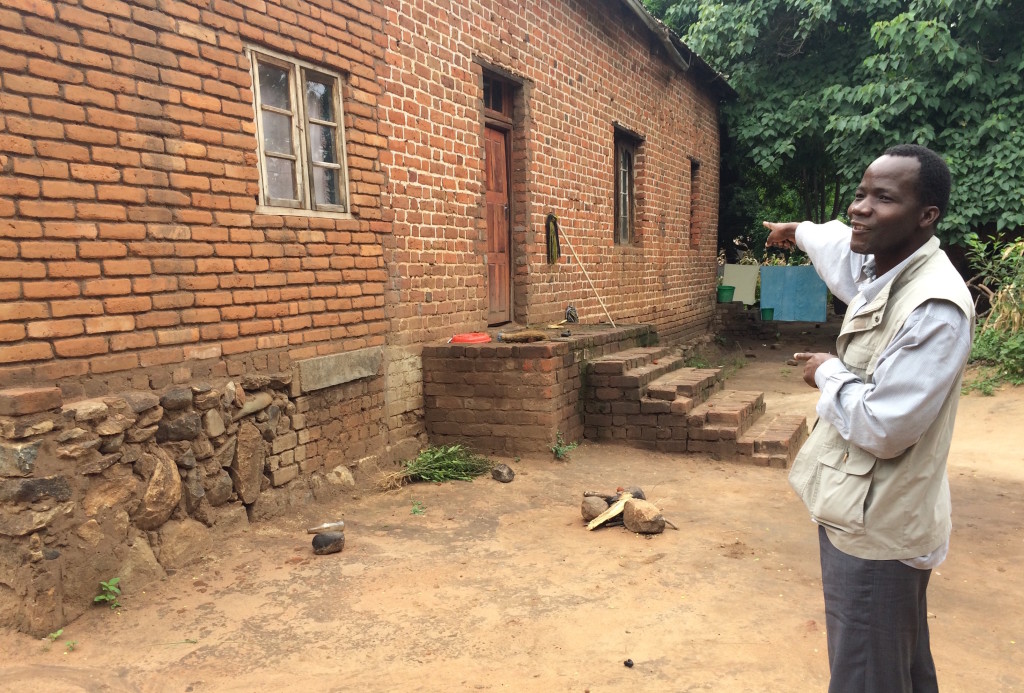
 We have been here four days now and they have been jam packed with beauty, adventure, laughter and heartache. In our four days we have spent a lot of time at the Masala Family village farm. The Masala Family is the reason that Dwankhozi Hope can do what they do. Their family consists of 10 siblings who were all educated at a university level, some with their masters and PhD’s. This fact became so much more incredible when we spent time in the village similar to where they grew up and where most children don’t make it past 9th grade. The challenges of village life are many. Famine, disease and lack of funds to send children to school make it incredibly hard for them to aspire to a life beyond the village. The Masalas have overcome these challenges and with hard work, dedication and incredibly inspiring parents they were able to do the unthinkable. They now serve as a beacon of hope to their community as they work tirelessly with the Dwankhozi School to encourage children to set their sites higher – for a better life for themselves and their families.

 Moses Masala (Uncle Mo) is the Project Director for Dwankhozi Hope in Zambia and one of the 10 siblings I talked about above. He has been our fixer – driving us everywhere and setting everything up for us. He is the sweetest most thoughtful man… and SO incredible smart. I don’t think we have stopped laughing since we arrived. He knows EVERYONE, being a caretaker to the entire village and town we are constantly making abrupt stops along our drives where Uncle Mo hops out of the car to see someone or take care of something.


Bertha Masala (Wa Bertha) is another of the 10 siblings – she is one of the most “bad-ass” chicks I have ever met in my life. Not only does she tell it how it is, but she has no reservation in dishing it out to anyone! She is also hilarious and has a remarkable gift of making you feel so at home and like you can be 100% yourself. We are heading to Lusaka later in the week (where she lives) where she will be taking me to her aerobics class. She says she loves it because she “can wear her short shorts and be very free”. She says Kirk is not allowed to join. This can be added to my list of things I never thought I would do in Africa.


Though the rainy season is one of the most beautiful times in Zambia it is also the hardest for the people here. It is known as the hunger season as the village farmers wait for their crops to grow. As we have learned most children arrive at school having had no breakfast and with no lunch in hand – surviving on one meal a day and mangos when they can find them. The rainy season also brings mosquitoes and more malaria than ever. It was shocking to see how casually people talk about the children at the school with malaria or how many times they have had it themselves.


When we slept at the farm we saw all of these things and it was hard to digest but we also felt the joy and sense of community that you would never see in the US. Sandwiched between Big Mama and Bertha - wearing her “snuggle up” t-shirt – Kate and I in the middle, we all giggled ourselves to sleep under our giant mosquito net. It’s so hard to put into words all the hilarious and surreal details from the farm.  It was definitely an out of body experience but one we will never forget.

Filming Trip 2012: Amesege’nallo’

Amesege’nallo’ in Amharic means thank you. I have never meant these words as much as I did when speaking them yesterday as we said our goodbyes in Ethiopia. With the experiences so fresh in our minds and the amazing events of the past few weeks having reached a point of such normalcy it is hard to find the words to give justice to this place and these people which we now hold so dear to our hearts. At this point we just want to say, from the bottom of our hearts, amesege’nallo’…


To our work team… American and Ethiopian, who built a basketball court, soccer field,library and girls and boys lavatories with the most BASIC tools in the scortching Ethiopian sun for the kids and Hadease School.


 To Waas… Our Ethiopian cowboy bus driver who was constantly smiling, and belting out his “country spirituals”. I will never forget when I asked if you would come to America and you told me… “ I will meet you in heaven honey. Its much easier to get in there, god doesn’t require paperwork”


To the kids at Hadase School. Hadase means renewal and as we thought we would be renewing your school with our construction projects, you renewed our hearts with a sense unguarded joy and compassion unlike anything we have ever experienced before.


To Almaz, the director of All Gods Children in Ethiopia, I have never anyone like you. To sacrifice the comforts of American life that you grew to know to return to your country and selflessly better the lives of orphans and children is truly and inspiration.


And to every other smiling face that we met in this beautiful country. You put a new meaning to love and appreciation that we will carry with us for the rest of our lives.

Happy New Year!

Hi Friends,

Happy New Year!  We wanted to take a moment to thank you for your support of Dwankhozi Hope (DH).   It has been a tremendous year of progress for our partnership with the local school in Zambia as we help empower this community to provide an education for their children and an opportunity for a better life.  Below is a quick recap of all that was accomplished in 2011 and a sneak peak of what is in store for 2012.

As you will see below, it has been a very busy and exciting year.  We thank God for all of our partners and donors who made this possible.  We look forward to the coming year and for the ways that each of us, our partners, and the children of Dwankhozi will be transformed through this work.

Have a Blessed and Happy New Year,

-The Dwankhozi Hope Team

2011 – Look Back

Projects

  • Completed Pre-K Building to help the younger children better prepare for school
  • Delivered supplies and equipment to the teachers helping them to provide a quality education to the students
  • Completed the first teacher’s house which will help attract more trained teachers and reducing class size
  • Held the first medical clinic at the school to evaluate the students and learn how we can help the children stay healthy and in school
  • In partnership with Beyond Solar, installed solar power and Internet giving the school electricity for the first time ever.  This allows the teachers to better prepare for school as well as develop an adult literacy program for the parents in the community
  • Delivered laptops and printers which will allow the teachers to develop more effective lesson plans
  • Sponsored our first DH student to continue her education at a secondary boarding school
  • Shipped educational supplies and sporting equipment to the school that will help improve the schools educational and sports programs

Finances

  • Thanks to our generous donors we raised an estimated $69,000 this year which was our most productive fundraising year to date
  • Thanks to our generous donors we were able to fund an estimated $55,000 in school programs our most productive year to date

2012 – What’s in Store

Projects

  • Complete a second teacher’s house project which will be a shared flat model providing housing for two families.  This will help attract even more trained teachers
  • Perform 2nd medical clinic with a focus on malaria which will address the main health issue in the region and help the children stay healthy and in school
  • Deliver electronic readers (Kindles) which will allow unlimited access to books and educational material for the students as books are currently sparse
  • Sponsor additional students to continue their education at a secondary boarding school
  • Sanitation projects adding additional safe and clean ventilated improved pit latrines
  • Additional solar and technology projects which will provide increased access to education for the community
  • Provide financial support for volunteer teachers to help them attain their teaching certificate which will in turn allow them to earn a salary from the government and focus full-time on teaching, thus improving the quality of education for the students
  • Deliver additional supplies and equipment to the school to help improve the quality of education


Next Trip to Zambia

In 6 weeks, two aspiring filmmakers will be visiting Dwankhozi Community School to film a day in the life of two students — Aly Schoonover, who is currently working on FILM FESTIVAL: RWANDA and Kirk Piper. Kate Ballbach will also be going to deliver and train the teachers on use of six Amazon Kindles as a teaching tool and electronic library concept. If you’re interested in our trip, please like our page so you can follow us! We arrive on January 14.


He’s Off – Climbing Mt. Aconcaqua

Christopher Kenessey started his climb yesterday of Mount Aconcaqua in Argentina to raise money for Dwankhozi. Please consider hugging him out with a donation today!

Learn more about his climb.

Learn more about Mt. Aconcaqua …


Published: A Medical Mission of Hope

Beth MacLean,RN, DH Director of Programs, recently wrote an article about her trip to Medical Trip to Zambia.  It was published  in the latest volume of the Outlook Magazine for Proliance Surgeons which serves 12 surgery centers in the Puget Sound area. Check it out here …


Solar Install: Final Post and Pics


We arrived in the village at about 10am, after purchasing some additional supplies in Chipata. A slight bit of anxiety crept over me as this was the real deal. What if it didn’t work? What if there was a problem we didn’t foresee? Well, worrying wasn’t going to accomplish anything.

We made an immediate assessment of the buildings we’d be working in. There was a classroom that shared a common wall with the head-master’s room. We decided that the batteries would be stored in the headmaster’s room and we’d run a wire through the wall to the lights in the classroom. We then looked at the rafters where we would hang the lights. There were joists running laterally across the room, and we decided to put 6 lights in the room: 2 lights on each joist. The wiring looked like a big “U” starting at the switch on one end, and working around the room with the last light on the other end of the “U.”

Once the hole was made and we had a “hot” wire coming down into our room, we got going. Well, we got going after we had to flush out a

few wasps from their nest with some branches we set on fire. The size of these buggers was a bit intimidating so making sure they wouldn’t sting us was priority number one. The next step was to assemble our makeshift work platform, which consisted of two rather shoddy desks underneath a rusted out 55 gallon oil drum. What made this even better was that the height of our work station was just tall enough that we had to keep a slight bend in our knees every time we were on top of it, lest our heads hit the scorching aluminum roof above. With the temperature and slight squat position we had to maintain, we were essentially doing Bikram Yoga, African village-style.

So that was the bulk of our work: wiring a junction box, bringing a wire down to the bottom and attaching the light socket. Only one person could be on the oil drum at a time, so Erik and I alternated from light to light. In the meantime, Moses had been wiring 2 lights in the headmaster’s room on the same “hot” wire but on a different switch, as well as wiring a second AC system for the laptop(s) to be charged. We both finished around the same time. It was long work, but rewarding, and when the lights came on at the end of the day and the computer ran off the batteries, it was all worth it.

The next day, Moses and a few of the people from the village spent most of the morning securing the panels to the racking equipment. He was concerned about theft, so he chained and welded the panels to the racks. I’m glad this precaution was taken. He then made some holes in the roof, with a hand-powered auger no less, and secured the panels. While this was happening, Erik and I wired another room where the teachers would do their prep work. No wasps, better desks to stand on, and at least one day of experience under our belt meant this work went a bit faster. A little crowd of kids had assembled to watch us, and I let a few of the more eager ones help us out. It was fun watching them become familiar with screwdrivers and junction boxes, and secretly I hoped I was inspiring some kid to become an engineer one day.When we were finished with the wiring, we installed the panel on the roof and all was good.

This is was my third project abroad with Beyond Solar, and every time I’ve completed one, I’ve had to ask myself who was gained more: the villagers or myself? I know that when I made the final connection, saw that the panels were charging the batteries and that the lights worked (and later, the laptop was charging), it was beyond rewarding. Moses had purchased a USB cellular modem and for the first time, this school would have access to the internet. The teachers would have time to prepare lessons outside of school hours. The kids could read at night. And the parents, many of whom are skeptical of education to begin with, would now have access to adult literacy classes.

I only spent 3 days in the village but I saw the potential. On the trip out of Dwankhozi, I spoke to Moses about future projects and how solar power can help them. We spoke of building and lighting a “study room” in each village. This would allow the kids that cannot return to school in the evening (many walk more than 3 miles per day, one way, to attend classes) to study at night. We discussed a solar system that could power a refrigerator for medical supplies that require refrigeration, and a solar powered irrigation system that could support an income producing cotton field. All noble pursuits and I believe we can accomplish them all. Lighting the schools was only the first step.

Solar Install: From Vision to Fruition

I’d like to say that it happened so fast, but in reality, it didn’t. Matt and I had spoken first about collaborating on a project together over a year ago. As I operate Beyond Solar in my free time, outside of my day job, and Dwankhozi Hope is also run by Matt as a side project, outside of his career, our two respective organizations don’t always get the attention they deserve. Persistence and a common vision though have resulted in a successful installation of solar power for the Dwankhozi school district.

While the actual installation of the panels, wiring, lights, and various other electrical components only took 3 days, the project completion itself was a culmination of planning that began a year ago. Matt and I exchanged countless emails about the needs of the pupils and teachers at the school: he gaining insight about my previous projects in India; me learning about the specifics of the environment where I’d be working. We agreed that the hybrid micro-financing model I used in India would not be applicable at Dwankhozi: simply put, the people were too poor to even make an interest free payment on a light. What Matt suggested was lighting for the school so the students could read at night, so the teachers would have more time to prepare lessons, and the parents could begin adult literacy classes.

As I mentioned before, I’m neither an engineer nor an electrician. So before the actual trip, I made a mock-up system at my parent’s home with the help of my dad and Erik, both much more familiar with the movement of electrons across wires. The premise was simple: a solar panel charges a battery during the day and the lights run of the power stored in the battery at night. But we had to incorporate a charge controller that maintains a constant voltage from the panels to the battery (if the voltage drops significantly, say, from a cloud in the sky reducing the sunlight hitting the panel, the battery may be damaged). Then we needed to add a voltmeter to the circuit to know the remaining power left in the battery (they’re never supposed to go below 50% charge). We also wanted a fuse to protect the circuit in case there was a short. We wanted to make sure the circuit was wired so that if one light went out, the rest still worked. Finally there was the sizing: we had to consider battery size, charge controller size, inverter size (for the AC system built to charge the laptops), wire size, and panel size. It was truly a crash course in electricity.

We had all the components except the panels, and the batteries were purchased fully charged, so we were able to wire a system at home. Seeing the lights turned on was quite a relief, and I truly believe that building that mock-up system allowed us to reduce significantly the time it took to complete the work in the village.

So diagrams of the mock-up system in tow, we checked what we could and we made it through London, Lusaka, and then Chipata. We were ready to get to work!

Jeff Olshesky
Beyond Solar 

Solar Installed: A picture says a thousand words

Solar power was installed today at the school. Power is available for the first time EVER! Thanks to Jeff Olshesky and Beyond Solar for travelling all the way to Zambia to install this and thanks to the Chicago Solar Committee and the marathon runners as well as all the donors who made this happen. Check out the first pic…”speaks a thousand words”…